
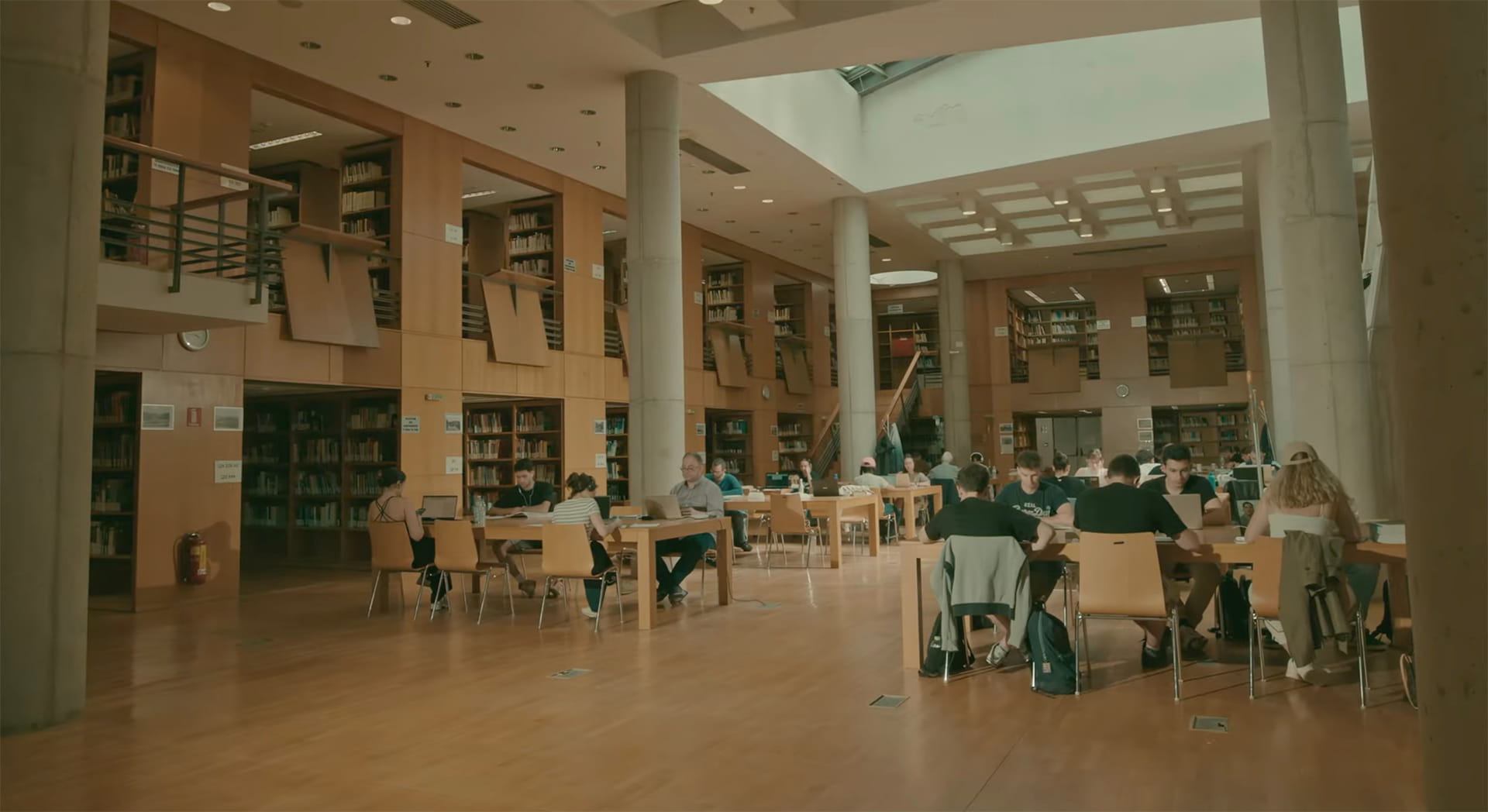
Fifty courses. Five years.
Thirty-four compulsory courses. Sixteen electives, of which you choose eleven. A 30-ECTS Diploma Thesis. One continuous arc from foundations to independent research.
The full shape of the degree.
Each semester carries 30 ECTS — typically five courses of six credits each, except the tenth, which is given over entirely to the Diploma Thesis. Every course is taught in English. Every course is examined.
Classical mechanics, oscillatory motion, mechanical waves, sound, geometric and wave optics, basic thermodynamics. Foundations for environmental measurement and modelling.
Course extended descriptionDifferential and integral calculus, real functions of one variable, vector spaces, matrix algebra and linear systems. Quantitative problem-solving for environmental science and engineering.
Course extended descriptionThe scope and role of environmental science and engineering: water and wastewater treatment, air pollution control, waste management, environmental impact assessment, sustainability and resilience.
Course extended descriptionAtomic structure, chemical bonds, stoichiometry, reactions, gas laws, thermochemistry and solution chemistry. Environmental applications: air and water chemistry, acid rain, ocean acidification, pollutant behaviour.
Course extended descriptionMolecular, cellular, organismal and ecological foundations. Cell structure, metabolism, gene expression, evolution, biodiversity and ecosystems — biology in service of environmental understanding.
Course extended descriptionElectromagnetism, Maxwell's equations, electromagnetic waves, special relativity and the foundations of quantum mechanics. Atomic, nuclear and particle physics linked to materials and environment.
Course extended descriptionMultivariable calculus, vector fields, divergence, curl, Green's, Stokes' and Gauss's theorems, ordinary differential equations. The mathematics of environmental flow and transport.
Course extended descriptionPopulation dynamics, ecological interactions, community structure, food webs, energy flow and biogeochemical cycles. Field and laboratory exercises in productivity, abundance and biomass.
Course extended descriptionSyntax, control structures, functions, data structures, object-oriented programming, file handling. Introductory data processing and visualisation through a final project.
Course extended descriptionPhase equilibria, transport phenomena, chemical kinetics, qualitative and quantitative analysis, instrumental methods and validation. Laboratory practice in environmental chemical analysis.
Course extended descriptionThe Earth as an integrated system: lithosphere, hydrosphere, atmosphere, biosphere. Plate tectonics, weathering, the hydrological cycle, ocean–atmosphere interactions, climate and natural hazards.
Course extended descriptionChemical processes in atmosphere, water, soil and the built environment. Greenhouse effect, ozone depletion, photochemical smog, water pollution, heavy metals, hazardous waste, cultural-heritage degradation.
Course extended descriptionBiological resources, biomass and bio-based value chains. Rural development, entrepreneurship and innovation in European and Mediterranean contexts. Environmental sustainability and socio-economic resilience.
Course extended descriptionDescriptive statistics, data visualisation, probability, sampling, hypothesis testing, goodness-of-fit and simple linear regression. Statistical reasoning and communication for environmental data.
Course extended descriptionNumerical methods, interpolation, ODE integration, Fourier analysis, Monte Carlo simulation, optimisation and introductory machine learning — applied to real environmental and engineering problems.
Course extended descriptionDiversity, evolution, morphology and adaptations of major animal and plant groups. Practical microscopy, anatomy, identification and comparative analysis through laboratory and field exercises.
Course extended descriptionMass and energy balances, reaction kinetics, reactor and bioreactor design, transport phenomena. Process engineering grounded in environmental impact, safety and sustainability.
Course extended descriptionAtmospheric composition, thermodynamics, radiation, the greenhouse effect, equations of motion, geostrophic and thermal winds. Atmospheric pollution at urban, regional and global scales.
Course extended descriptionCrop water requirements, irrigation system design, surface and groundwater hydrology, drainage, smart farming and precision irrigation. Climate-resilient water management for agriculture.
Course extended descriptionEnvironmental Impact Assessment, ISO 14001 and ISO 50001, energy and environmental management, risk assessment. Decision-making through real environmental performance case studies.
Course extended descriptionAtmospheric composition, biogeochemical cycles, ozone chemistry, aerosol radiation, energy balance and large-scale ocean–atmosphere interactions. Climate variability and long-term change through observation and modelling.
Course extended descriptionGovernance structures, the policy cycle, regulatory and market-based instruments. Common Agricultural Policy, Farm to Fork Strategy, EU Biodiversity Strategy and the European Climate Law.
Course extended descriptionIntegrated water resources, irrigation efficiency, soil quality and resilience, biomass and bioconversion processes. Quantitative methods for sustainable resource decision-making.
Course extended descriptionTechno-economic analysis of chemical and environmental processes, with focus on wastewater treatment. Feasibility, flow diagrams, equipment sizing, cost estimation, profitability and process optimisation.
Course extended descriptionStructure, function and dynamics of terrestrial, freshwater and marine ecosystems. Trophic levels, energy flow, resilience and the impact of land use change, pollution and climate change.
Course extended descriptionSolar and terrestrial radiation, radiation transfer theory, sensor technologies. Earth observation systems — multispectral, hyperspectral, thermal and microwave — applied to environmental monitoring.
Course extended descriptionGreenhouse gas accounting, energy efficiency, land use mitigation, soil and water practices, carbon farming. Sector pathways for crops, livestock, urban environments and food systems.
Course extended descriptionBiodiversity patterns, drivers of loss and conservation strategies in the Anthropocene. Land use, climate change, invasive species, extinction, and trade-offs between conservation and development.
Course extended descriptionEnvironmental valuation, externalities, transition from linear to circular models. Reuse, recycling, nutrient and energy recovery, SDGs, ESG, EU directives and Life Cycle Assessment.
Course extended descriptionConventional, renewable and emerging energy systems — performance, sustainability, life cycle assessment. Energy policy, carbon reduction and global energy transitions.
Course extended descriptionAtmospheric boundary layer, turbulence and pollutant dispersion. Atmospheric chemistry: photochemical reactions, tropospheric ozone, NOₓ, hydrocarbons, SO₂ oxidation and acid deposition.
Course extended descriptionIntegrated waste management in the circular economy: classification, collection, recycling, composting, anaerobic digestion, thermal treatment, landfill. Hazardous, electronic, marine and agricultural waste streams.
Course extended descriptionChoose from the sixteen elective courses — see the elective directory below.
Choose from the sixteen elective courses — see the elective directory below.
Choose from the sixteen elective courses — see the elective directory below.
Sustainable management of agricultural residues in the circular bioeconomy. Composting, anaerobic digestion, biogas, pyrolysis and gasification. Production of biofertilisers, biofuels and high-value bioproducts.
Course extended descriptionCities transitioning to low-carbon energy. Building energy demand, urban renewables, integrated planning. Sustainability certification (LEED, BREEAM) and real-world urban energy case studies.
Course extended descriptionChoose from the sixteen elective courses — see the elective directory below.
Choose from the sixteen elective courses — see the elective directory below.
Choose from the sixteen elective courses — see the elective directory below.
The final semester of taught courses — entirely chosen by the student from the elective directory below.
The final semester of taught courses — entirely chosen by the student from the elective directory below.
The final semester of taught courses — entirely chosen by the student from the elective directory below.
The final semester of taught courses — entirely chosen by the student from the elective directory below.
The final semester of taught courses — entirely chosen by the student from the elective directory below.
A single, sustained research project carried out under the supervision of a faculty member from any of the participating Schools. Topic chosen by the student in consultation with their supervisor; outputs may include experimental, computational, or field-based research, contributing to active research programmes across the five Schools.
Sixteen Elective Courses. One Degree.
Of the sixteen elective courses on offer, students choose eleven across semesters seven, eight and nine. Any combination is permitted — but the courses naturally cluster into four thematic directions, each one a coherent specialisation path.
The clusters below are a guide for prospective students. The formal regulations describe the sixteen as a flat list — students may freely combine any eleven.
Atmosphere, Climate & Earth–Space
For students drawn to atmospheric physics, observational climate science and the wider Earth–Sun system. Builds on Atmospheric Physics & Climate (S4) and Physics of Climate Change (S5).
Lidar systems for aerosol and ozone, solar photometers, spectroradiometer calibration. Experimental data acquisition, algorithms and atmospheric pollution measurement.
Course extended descriptionEulerian and Lagrangian dispersion models, trajectory analysis. Practical training with FLEXPART, CALINE and HYSPLIT for past and future air-pollution episodes.
Course extended descriptionRadiation transfer modelling using libRadtran. Sensitivity studies, accuracy assessment and applications in radiation transfer and remote sensing interpretation.
Course extended descriptionCosmogenic and terrestrial radionuclides; behaviour in air, water, soils and biota. Anthropogenic sources, dosimetry and human-health impacts.
Course extended descriptionEarth–Sun–solar system interactions as drivers of climate. Planetary formation, celestial mechanics, space weather, magnetosphere, satellites and Earth observation missions.
Course extended descriptionUrban climate vulnerability, meteorological hazards, flood and drought modelling, future climate projections. Adaptation through nature-based solutions and resilience planning.
Course extended descriptionData, Modelling & Decision Tools
For students who want to specialise in the quantitative core of environmental science — from machine learning to predictive modelling and assessment frameworks.
Environmental data systems, time series, machine learning for forecasting, sensor networks and IoT, citizen science and participatory monitoring.
Course extended descriptionMarine and terrestrial ecosystem modelling. Practical training with Ecopath with Ecosim (EwE) for food-web modelling, scenarios and policy-relevant assessment.
Course extended descriptionExperimental design (factorial, randomisation), regression modelling and diagnostics. Forecasting techniques including ARIMA models and applied statistical software.
Course extended descriptionEU and national EIA frameworks, EMAS, ISO 14001, ISO 50001, Ecolabel, LEED, BREEAM. Carbon footprint reduction strategies and intervention design.
Course extended descriptionHazard identification, risk assessment, vulnerability analysis. Field environmental sampling and laboratory analysis in disaster-affected areas; recovery and public-health planning.
Course extended descriptionCircular Economy & Industrial Sustainability
For students interested in the engineering and economic transformation of industrial systems — supply chains, recycling, bioeconomy and impact assessment.
Procurement, production, logistics and distribution under sustainability criteria. Carbon footprint, ISO 14001, GRI, UN SDG-aligned reporting; case studies on emissions and waste reduction.
Course extended descriptionMechanical, solvent-based, chemical and thermochemical recycling — with strong focus on polymers. PET, plastic packaging, WEEE, end-of-life vehicles, tyres, paper, metals and glass.
Course extended descriptionMicrobial structure, metabolism and diversity. Bioremediation, waste treatment, pollutant detoxification and genetic engineering for environmental protection.
Course extended descriptionAlso relevant here — frameworks for assessing industrial systems against ISO 14001, ISO 50001 and circular economy principles.
Course extended descriptionEcosystems, Biodiversity & Agriculture
For students drawn to ecosystem science, biodiversity conservation and the management of agricultural and natural systems — anchored in AUTH's #1-in-Greece Agriculture School.
Soil as ecosystem, plant biology, population ecology, nutrient cycles, pest ecology and biodiversity. Conventional, organic and regenerative systems compared; agroforestry and ecosystem services.
Course extended descriptionMechanisms of evolutionary change, natural selection, genetic drift, gene flow, population genetics, phylogeny, neutral theory and adaptation in genomic-era biology.
Course extended descriptionAlso relevant here — microbial communities in terrestrial and aquatic ecosystems and their applications in bioremediation and sustainable agriculture.
Course extended descriptionAlso relevant here — ecosystem indicators and assessment frameworks for sustainability, ecosystem health and climate impacts.
Course extended descriptionAlso relevant here — environmental sampling and ecosystem damage assessment after disasters.
Course extended descriptionSix months. Original research.
The Diploma Thesis is the largest single piece of academic work in the programme. Carried out across the whole of the tenth semester, it carries 30 ECTS — equivalent to five normal courses — and is supervised by a faculty member from any of the five participating Schools.
Thesis topics are chosen by the student in consultation with their supervisor and may take experimental, computational, or field-based form. Students typically embed within an active research laboratory, contributing to ongoing work that may continue beyond graduation.

Ready to Discover More?
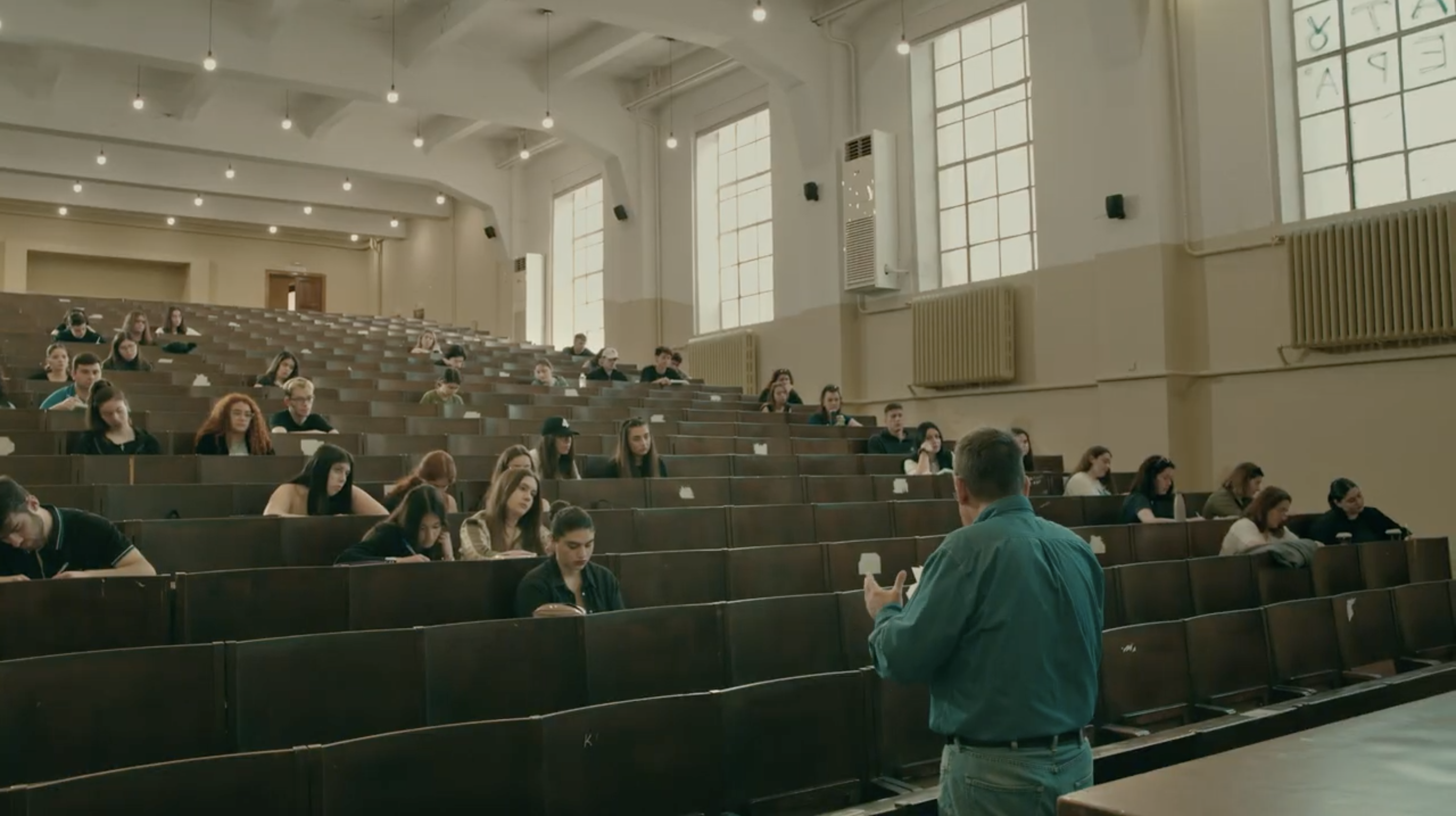
Meet the faculty
The 64 senior researchers across five Schools who designed and teach the curriculum.
View faculty →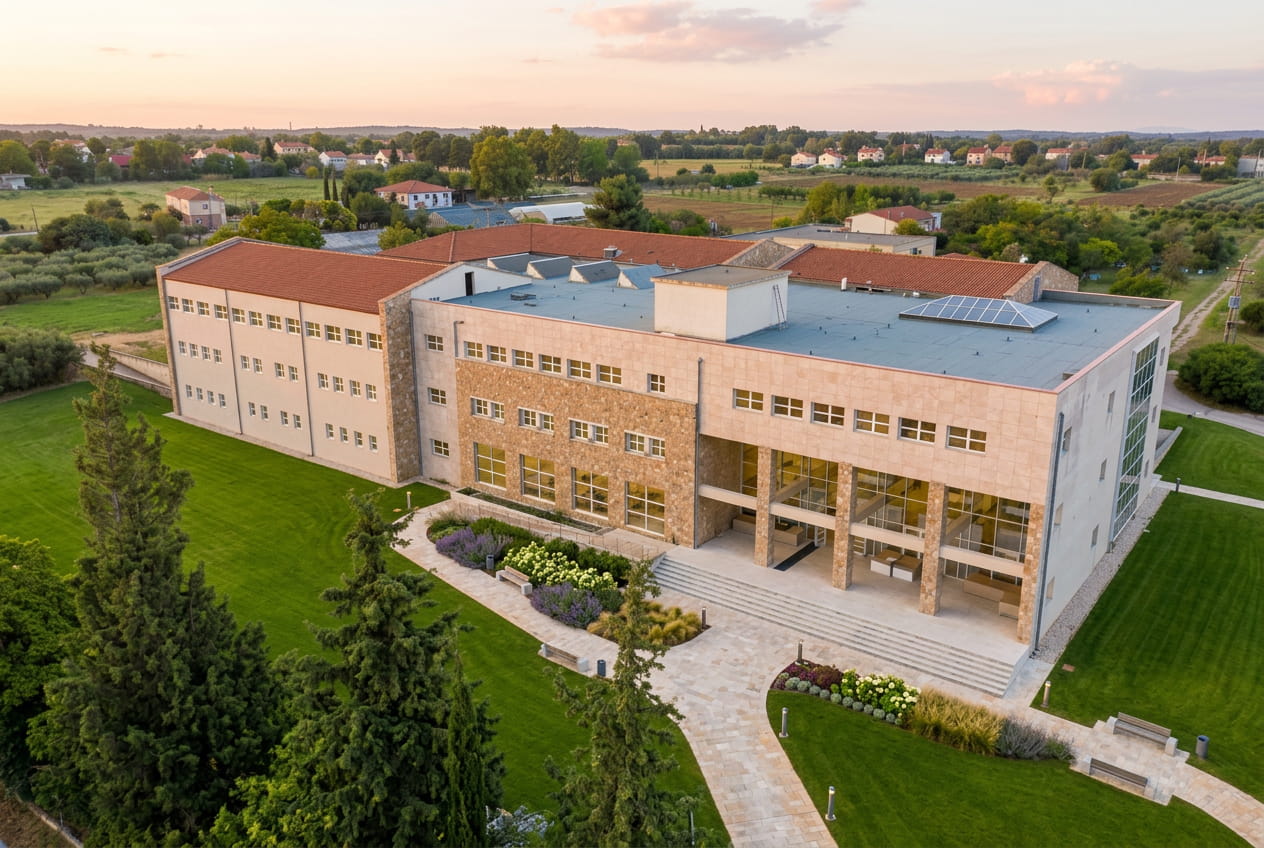
Active research
The laboratories and ongoing programmes that thesis students embed within.
Research labs →
How to apply
Eligibility, documents, timeline. Applications open year-round.
Begin application →