One Planet.
One Environmental Future.
One Degree.

A five-year Integrated Master’s programme — research-driven, interdisciplinary and open to the world. Learn through laboratories, field training, modelling and real environmental data in a major Mediterranean climate hotspot.

24–40 places available  ·  Fully English-taught  ·  5-year Diploma with Integrated Master  ·  EQF Level 7

300 ECTS
Five-year Integrated Master's
5 Schools
Co-designing one curriculum
64 Faculty
Senior researchers across disciplines
€6,000 / year
Full Mediterranean tuition
The qualification

A single Diploma — equivalent to a Master's degree.

The programme awards a five-year, 300 ECTS Integrated Master's Diploma, recognised across the European Union as a Level 7 qualification.

The card on the left highlights why this Integrated Master's pathway offers a stronger academic route than many standard environmental programmes worldwide.

The global advantage
Environmental careers now require more than a conventional single-discipline degree.

Built for a field that no longer fits inside one department

Climate · Energy · Water · Food systems · Circular economy
  • Environmental challenges are increasingly technical, scientific, regulatory, and economic at the same time
  • Many programmes approach the environment through one dominant lens — science, engineering, policy, or agriculture
  • Employers and research teams need graduates who can move between data, laboratories, field systems, infrastructure, and decision-making
  • The strongest candidates are those who understand both natural processes and engineered solutions
  • This programme is designed for students who want to enter that wider professional and research landscape with broader preparation
5
Diploma · Integrated Master's · EQF Level 7

Diploma in Environmental Sciences and Engineering

300 ECTS  ·  10 semesters  ·  English-taught
  • A single five-year Integrated Master's Diploma — Bachelor's plus Master's combined into one programme
  • Curriculum co-designed by five AUTH Schools: Physics, Chemistry, Biology, Mechanical Engineering, Agriculture
  • Diploma Thesis opportunities across twenty established research laboratories
  • Direct entry to doctoral programmes anywhere in the EU — no additional Master's required
  • EQF Level 7 — equivalent in academic terms to a standalone Master's degree
  • Recognised across all 27 EU member states
Equipped to thrive in a growing field.
Five years of laboratory exposure across five Schools, a research thesis embedded in an active lab, and the analytical and technical capacity to work across disciplines — from atmospheric chemistry to environmental engineering, from policy to applied practice.
The five Schools

Co-designed by specialists, taught as one.

The programme is anchored in five Schools of Aristotle University of Thessaloniki, with contributors from Civil Engineering and Geology. Sixty-four faculty in total, distributed almost evenly across disciplines.

/ School 01 Visit school

Physics

Atmospheric · Climate · Astrophysics · Nuclear

AUTH hosts a strong and internationally recognised Atmospheric Physics research community, active in climate, air quality, atmospheric composition and Earth observation.
/ School 02 Visit school

Chemistry

Pollution Control · Environmental Technology

31 faculty in Stanford Top 2% global researchers
/ School 03 Visit school

Biology

Ecology · Ichthyology · Botany · Marine systems

Member of the international FishBase consortium
/ School 04 Visit school

Mechanical Engineering

Energy · Sustainability · Industrial Management

€15M+ in research funding over five years
/ School 05 Visit school

Agriculture

Water Resources · Soil · Bioeconomy · Agroecosystems

#1 in Greece for Agricultural Sciences (NTU 2024)
Meet our

Faculties.

Stanford / Elsevier 2025
31
AUTH Chemistry researchers in the world's top 2%
NTU Rankings 2024
#1
in Greece for Agricultural Sciences
AUTH Research Infrastructure
295
active research laboratories
Across five Schools · open to programme students
Faculty seniority
59%
of teaching faculty are full Professors
Senior teaching firepower · not adjuncts
Why study with us

Built on AUTH's research strength, taught for the world ahead.

/ 01

Integrated science and engineering education

A 5-year Diploma with Integrated Master that combines Environmental Sciences and Environmental Engineering in a single, coherent academic pathway — not two separate qualifications.

/ 02

Practice-based learning from the early semesters

Laboratory training, computational modelling and fieldwork are embedded throughout the programme, progressively leading to applied, project-based environmental problem-solving.

/ 03

Access to advanced laboratories and field infrastructure

Physics, chemistry, biology, agriculture and engineering laboratories, experimental fields, environmental monitoring systems, GIS and remote sensing tools — all open to programme students.

/ 04

Learning in real environmental contexts

Field training in natural and managed ecosystems, with direct exposure to the climate, environmental stress and sustainability challenges of the South-Eastern Mediterranean.

/ 05

Research-driven public university

Teaching is closely linked to internationally recognised research groups, offering early exposure to the latest scientific developments, data-driven analysis and applied environmental research.

/ 06

A small cohort, individual attention

24 to 40 students per cohort. The selectivity that lets faculty know your name, your work, and the shape of your thinking — in a programme small enough to feel personal.

Study areas & professions

What you study. Where you go.

Five interlocking study areas across the curriculum — and the professional roles each one prepares you for. Click an area to see how it connects to careers in the field.

  • / 01
    Fundamental Environmental Sciences
  • / 02
    Environmental Engineering & Technological Systems
  • / 03
    Climate Change, Atmosphere & Environmental Risk
  • / 04
    Sustainable Resource Management & Circular Economy
  • / 05
    Quantitative Methods, Modelling & Digital Environmental Tools
Study area / 01

Fundamental Environmental Sciences

The scientific foundation — physics, chemistry, biology, ecology — applied to natural and managed environments. How systems function, how to measure them, how to interpret what you find.

Where it leads

Environmental researcher

Designs and runs studies in research institutes, universities, or government agencies.

Environmental chemist

Specialises in pollutants, treatment, and the chemistry of environmental systems.

The institution & the city

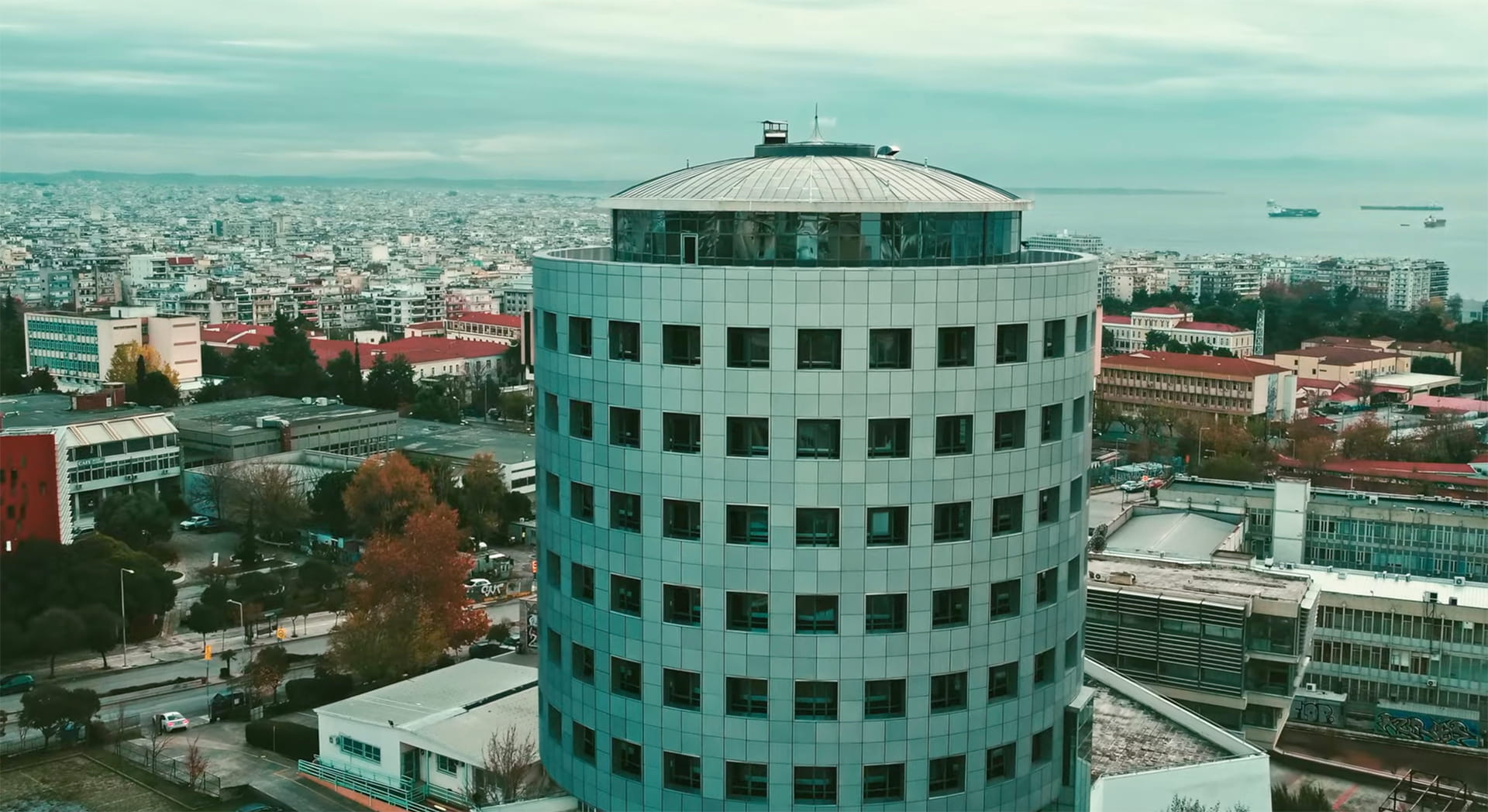
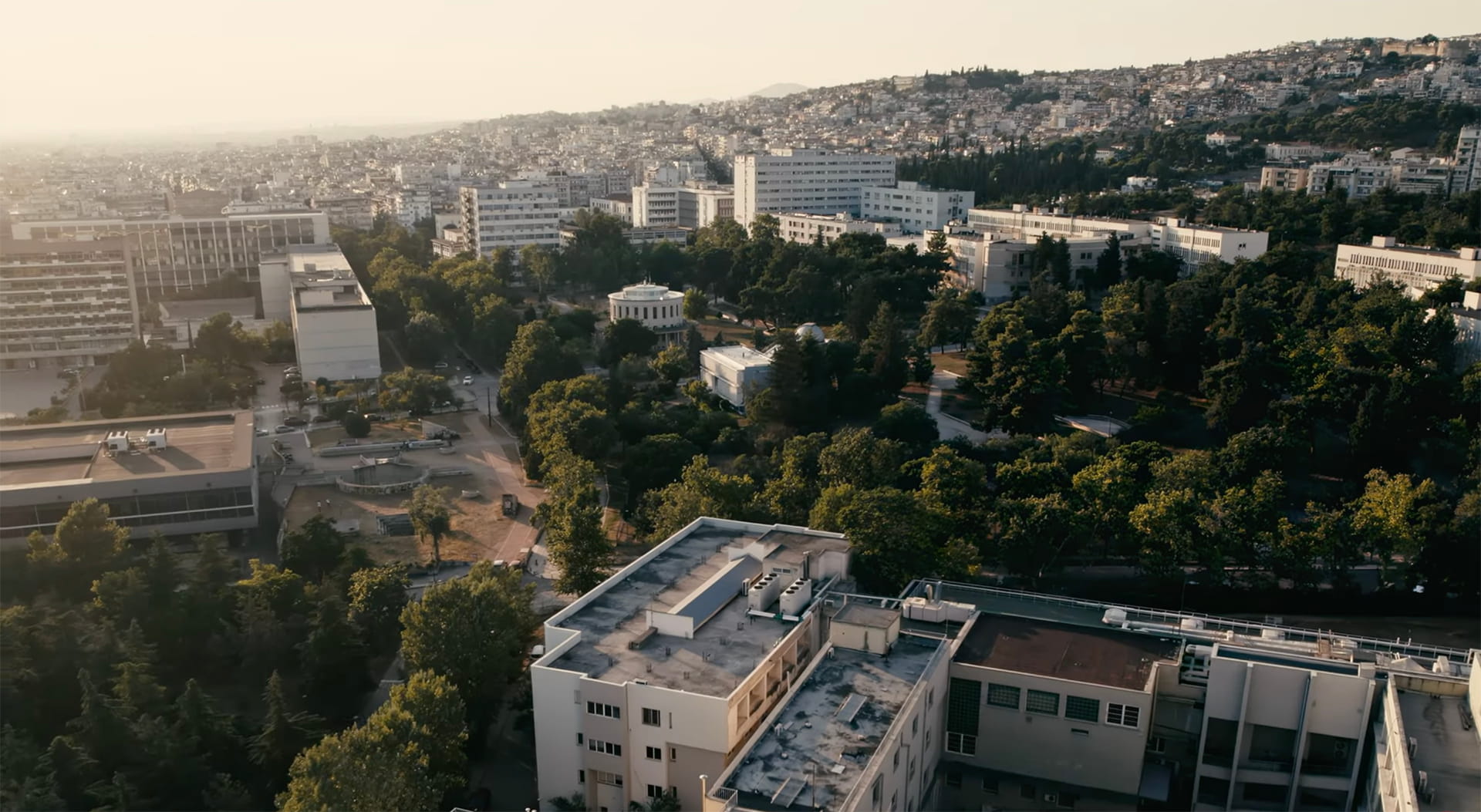
Aristotle University. Thessaloniki.

— The University

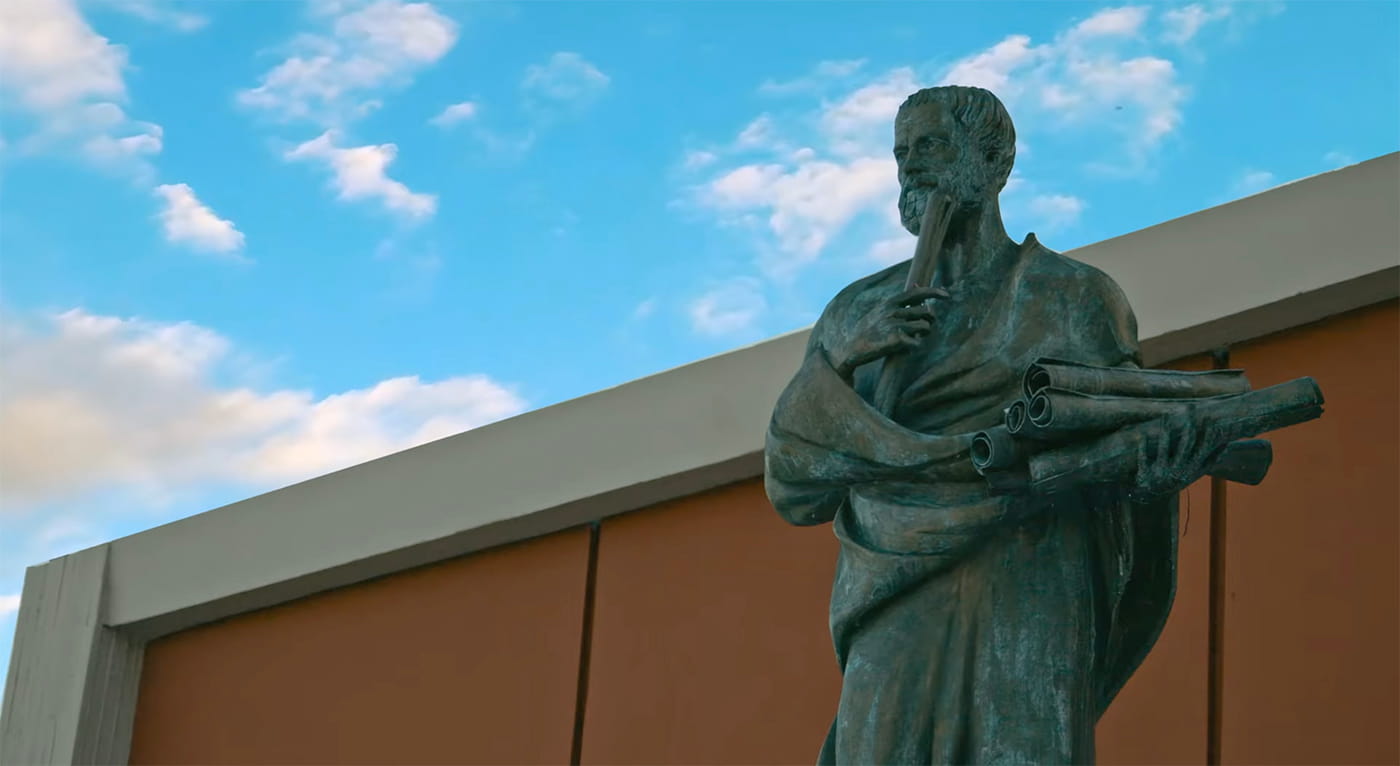
Aristotle University of Thessaloniki

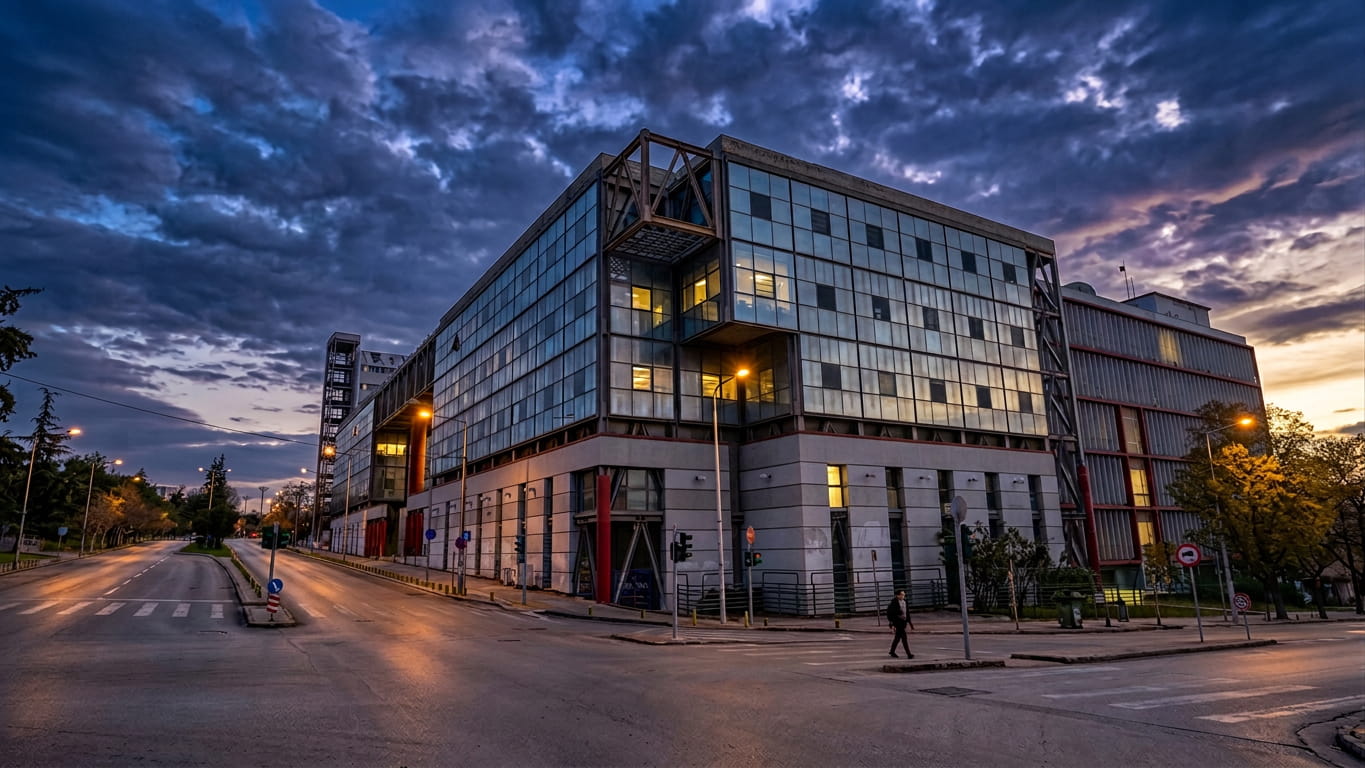
The largest university in Greece and one of the largest academic communities in Southeast Europe. Founded in 1925, with 295 active research laboratories, more than 70,000 students, and 41 academic Schools.

Consistently ranked in the top 600 universities globally and among the top universities in Greece across multiple disciplines — from Agricultural Sciences (1st nationally, 135th globally per NTU 2024) to Chemistry (1st nationally per Research.com and EduRank).

  • Strong research tradition supporting scientific discovery and technological development
  • European Higher Education framework — degrees recognised across Europe
  • International learning community connected with universities and research centres worldwide
— The City

Thessaloniki

Located by the Aegean Sea and home to more than one million people in its wider metropolitan area, Thessaloniki combines a strong academic presence with the relaxed rhythm of Mediterranean living. Roman, Byzantine, Ottoman, and modern Greek heritage; UNESCO-listed monuments; a diverse, walkable city.

Mediterranean climate. Direct flights to more than 135 international destinations. Living costs that allow you to focus on your studies rather than your overdraft.

  • Traditions of hospitality and openness — welcoming to international students
  • From the waterfront to nearby nature — the Mediterranean coast and Mount Olympus within reach
  • A genuine student city — affordable, lively, integrated with the university
News & updates

From the Programme.

All news
Physics

Nobel Laureate Kip Thorne named Honorary Doctor of AUTH Physics

AUTH honours Kip Thorne for his landmark contribution to gravitational waves, black holes, general relativity, and the scientific legacy of LIGO.

Read more
ESA

AUTH Master’s students selected for the 2026 ESA Science Hub Challenges

Students from the Atmospheric Environment and Global Changes postgraduate programme will represent LAP-AUTH at ESA’s ESRIN facility in Italy.

Read more
Training

ESA–ECMWF–EUMETSAT Atmospheric Composition Training comes to Thessaloniki

The Laboratory of Atmospheric Physics will host a leading international training course for early-career scientists in atmospheric composition and Earth Observation.

Read more
Conference

LAP team presents research at the ACTRIS 2026 Conference in Oslo

LAP researchers contributed oral and poster presentations on aerosols, satellite validation, EarthCARE, dust retrievals, and air-quality estimation.

Read more
Climate security

From Science to Security: LAP-AUTH shares expertise on wildfire monitoring

LAP researchers presented how satellite and ground-based instruments support wildfire monitoring, decision-making, and environmental risk management.

Read more
Infrastructure

Greece officially joins ACTRIS ERIC, strengthening atmospheric research in Europe

AUTH and LAP contribute as key national partners in ACTRIS-Greece, advancing atmospheric observations and European research collaboration.

Read more
Applications open year-round · cycle closes 30 September

Five years. One Diploma. A career across Europe.

Applications are reviewed in the order received. Up to three full-tuition entry scholarships awarded each cohort. If you'd like to talk through eligibility, fees, or scholarships before applying — we'd rather you did.